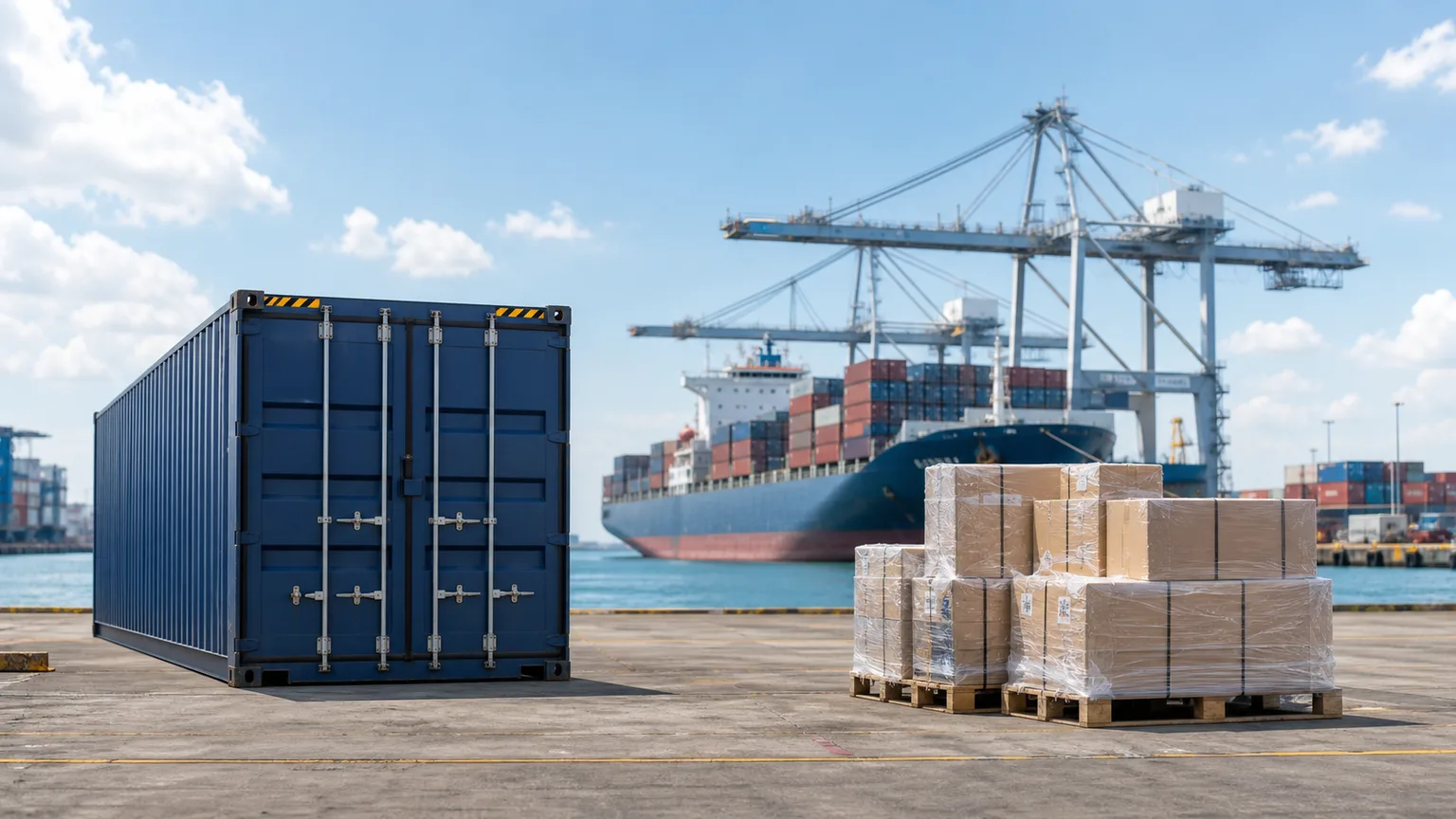
Understand what affects UK sea freight costs, including FCL or LCL, route, handling, customs, delivery and charges that may sit outside a quote.
What determines the cost of sea freight?
Sea freight does not have one fixed price. A useful quote combines the cargo, container or consolidation method, route, timing and the origin-to-destination services your business actually needs.
- Shipment size and method
- Container size, FCL or LCL, weight, dimensions and specialist equipment change how the cargo is priced.
- Route and capacity
- Origin, destination, transhipment points, carrier capacity and seasonal demand affect the available rate.
- Port and handling charges
- Terminal, documentation, security, loading and destination handling can sit outside the headline ocean rate.
- Customs and taxes
- Declarations may be quoted separately, while duty and import VAT are not normally part of the freight charge.
- Door delivery
- Collection, inland haulage, delivery access, waiting time and container return requirements affect the delivered cost.
- Validity and exceptions
- Exchange rates, demurrage, detention, storage, hazardous goods and changed cargo data can create additional charges.
Sea freight costs are built from the complete movement, not one universal price per container. A UK importer or exporter may need collection, export handling, ocean transport, destination charges, customs clearance and final delivery. Two quotes can therefore show different totals because they cover different stages, routes or assumptions.
The most reliable way to budget is to define the shipment first, then compare providers against the same door-to-door scope. Current carrier capacity, exchange rates and surcharges can change, so a planning estimate should never be treated as a confirmed booking rate.
Start with the cargo information
A sea freight provider needs accurate cargo data before it can choose the equipment and price the movement. Prepare:
- the collection and delivery addresses, including postcodes and countries;
- a clear description of the goods;
- the number and type of packages, pallets or units;
- the length, width, height and gross weight of every package;
- whether units are stackable;
- the cargo value, currency and country of origin;
- any hazardous, fragile, temperature-sensitive or oversized characteristics;
- the required collection and delivery dates;
- the agreed Incoterm and the services each party is responsible for.
If the final dimensions or weight differ from the quote request, the shipment may need a different container, more space or a revised rate. Jenkar's container calculator can provide an early pallet-fit estimate, but the booking must use verified cargo data and carrier acceptance.
FCL or LCL changes the pricing method
The first major decision is whether the shipment uses a full container load or shares container space.
Full container load (FCL) means one shipper uses the container. Pricing is influenced by the container type, route, equipment availability and services around the ocean movement. FCL may be suitable when the volume justifies a container, the cargo needs separation or the loading plan benefits from dedicated equipment.
Less than container load (LCL) combines shipments from several customers. The charge is usually shaped by the space and handling required, subject to the consolidator's rules and minimums. LCL can be efficient for smaller consignments, but consolidation and deconsolidation introduce additional handling stages.
The cheaper method depends on the actual cargo and route rather than a fixed volume rule. Compare both when a shipment sits near the practical crossover point. Jenkar's FCL versus LCL guide explains the operational trade-offs in more detail.
Container and equipment requirements
Standard dry containers are not suitable for every shipment. The quote may change when the cargo requires:
- a 20-foot or 40-foot standard container;
- a high-cube container for additional internal height;
- a refrigerated container;
- an open-top or flat-rack solution;
- tank equipment;
- breakbulk or out-of-gauge handling;
- specialist securing, lifting or survey work.
Large, heavy or unusually shaped cargo may also need route surveys, permits, cranes, escorts or specialist vehicles before and after the port. These requirements belong in the original brief rather than being discovered after booking. For complex equipment, use the project cargo service to plan the whole route and handling sequence.
Route, carrier capacity and transit plan
The ports and sailing plan affect both rate and reliability. A direct service can carry a different price from a route involving transhipment. The available option also depends on carrier schedules, equipment, port calls and current capacity.
When comparing routes, check:
- the origin and destination ports;
- whether the service is direct or uses a connecting port;
- the estimated port-to-port transit;
- the cargo cut-off and documentation cut-off;
- sailing frequency;
- the collection and final-delivery plan;
- what happens if the booked sailing changes.
A low ocean rate may not be the best delivered option if it adds a long inland journey, another handling point or a schedule that does not protect the required delivery date.
Charges before the vessel departs
The ocean freight line is only one part of the cost. Origin-side charges can include collection, container delivery, export haulage, terminal handling, documentation, security, weighing, customs declarations and specialist loading.
Ask the provider to separate included charges from estimated or excluded costs. The correct scope depends on the Incoterm and the responsibilities agreed between buyer and seller. Jenkar's Incoterms reference is a useful starting point, but the commercial contract should state who arranges and pays for each stage.
Ocean freight and carrier surcharges
The main rate can move with carrier capacity, fuel, equipment balance, seasonality, disruption and foreign exchange. Depending on the service, carriers may apply fuel, low-sulphur, security, congestion, peak-season or other route-specific surcharges.
A serious quote should show:
- the rate-validity date;
- the currency and exchange-rate basis;
- the named route and container method;
- current surcharges included in the total;
- charges that are provisional or payable elsewhere;
- the assumptions that would require requoting.
Rates can expire quickly in a changing market. Confirm the booking while the quoted validity and capacity are still available.
Destination handling and final delivery
After arrival, the shipment may incur terminal, deconsolidation, documentation, customs, release and delivery charges. Door delivery can also depend on the receiving site's access, unloading equipment, booking window and ability to accept or return a container.
Confirm whether the quote includes:
- destination terminal or depot handling;
- customs-clearance support;
- delivery to the named postcode;
- timed or booked delivery;
- tail-lift, crane or other unloading requirements;
- waiting time allowances;
- empty-container return where relevant.
This is why port-to-port prices should not be compared with door-to-door quotes as though they deliver the same outcome.
Customs, duty and VAT are separate questions
Freight charges do not automatically include import duty, VAT or every customs cost. Classification, origin, value, importer details and licences can affect what must be declared and paid.
Check who will prepare the export and import declarations, which documents are required and whether the customs service is included in the quote. Keep the commercial invoice, packing list and supporting origin or licence evidence ready before the cargo moves. Jenkar's customs clearance service can coordinate the declaration stage with the wider shipment.
Duty and VAT depend on the goods and transaction. They should not be guessed from the freight price. Use current official guidance or specialist advice when classification, origin or valuation is uncertain.
Storage, demurrage and detention risk
Additional charges can arise when cargo or equipment remains at a port, terminal or customer site beyond the allowed free time. The terminology and rules vary, but the practical protection is the same: know the arrival plan and act before free time expires.
Ask:
- when free time starts and ends;
- who receives arrival and release notices;
- which documents or payments could hold the cargo;
- whether the delivery site is ready;
- how quickly an empty container can be returned;
- what daily charges may apply after the allowance.
Prompt paperwork and a realistic delivery plan reduce avoidable storage, demurrage and detention exposure.
How to compare sea freight quotes
Put each quote against one checklist rather than choosing the lowest headline total. Confirm that every provider has priced the same:
- cargo description, pieces, dimensions and weight;
- FCL, LCL or specialist equipment method;
- origin, destination and route;
- collection and final-delivery addresses;
- origin and destination handling;
- customs responsibilities;
- carrier surcharges and currency assumptions;
- rate validity and capacity basis;
- exclusions and possible additional charges;
- named contact and update process.
Use the broader UK freight quote comparison guide when reviewing several providers or transport modes.
Request a tailored sea freight quote
Jenkar coordinates FCL, LCL and specialist sea freight for UK businesses, including collection, customs, delivery and connected warehousing where required. There is no honest universal online price because the route, cargo, timing and service scope change the result.
Send the collection point, delivery point, cargo description, package count, dimensions, weight, value, timing and any special requirements through the Jenkar quote form. The team can identify missing information, explain the proposed scope and provide a route-specific quote for review.