
Incoterms® 2020 reference
Incoterms are briefly described here, but the term used in a contract should always be studied in full so obligations and risks are understood.
Incoterms at a glance
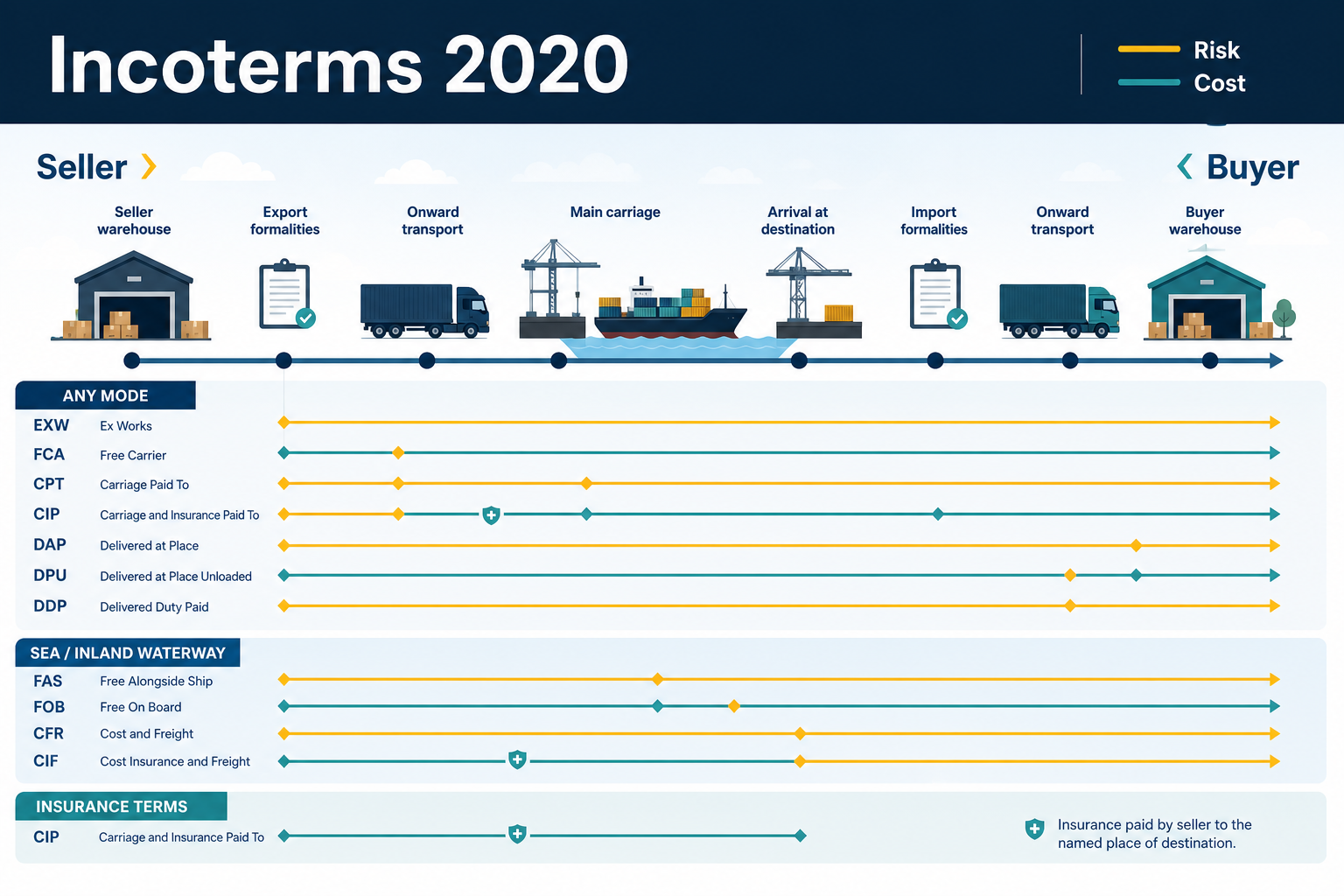
Make the handover clear before goods move
Incoterms 2020 set out where delivery takes place, when transport risk passes from seller to buyer, and which party normally arranges particular freight, insurance and customs tasks.
Use the infographic to compare the handover points, then write the chosen three-letter rule and a precise named place into the sales contract—for example, “FCA seller’s premises, Wakefield, Incoterms 2020”.
Choose the rule around the real movement rather than commercial habit. Map who will load at origin, book the main carriage, complete export and import formalities, pay duties and taxes, insure the cargo where required, and unload at destination. The named place can change the practical handover significantly, so both parties should record the exact location and the 2020 version. A freight forwarder can explain the transport implications; contractual or legal questions may still need specialist advice.
They do not cover everything
Incoterms do not decide ownership, payment terms, product quality or what happens after a breach of contract. Those points still belong in the wider agreement.
Mode matters
FAS, FOB, CFR and CIF are for sea or inland waterway transport. Rules such as EXW, FCA, CPT, CIP, DAP, DPU and DDP can be used across transport modes.
Check customs responsibility
Confirm who can legally act as exporter or importer, who holds the required registrations, and who will pay duties and import VAT before selecting a rule.
For contract term checks
Not sure which term fits?
Ask Jenkar to sense-check the freight route and documents before you agree the movement.
Ask Jenkar