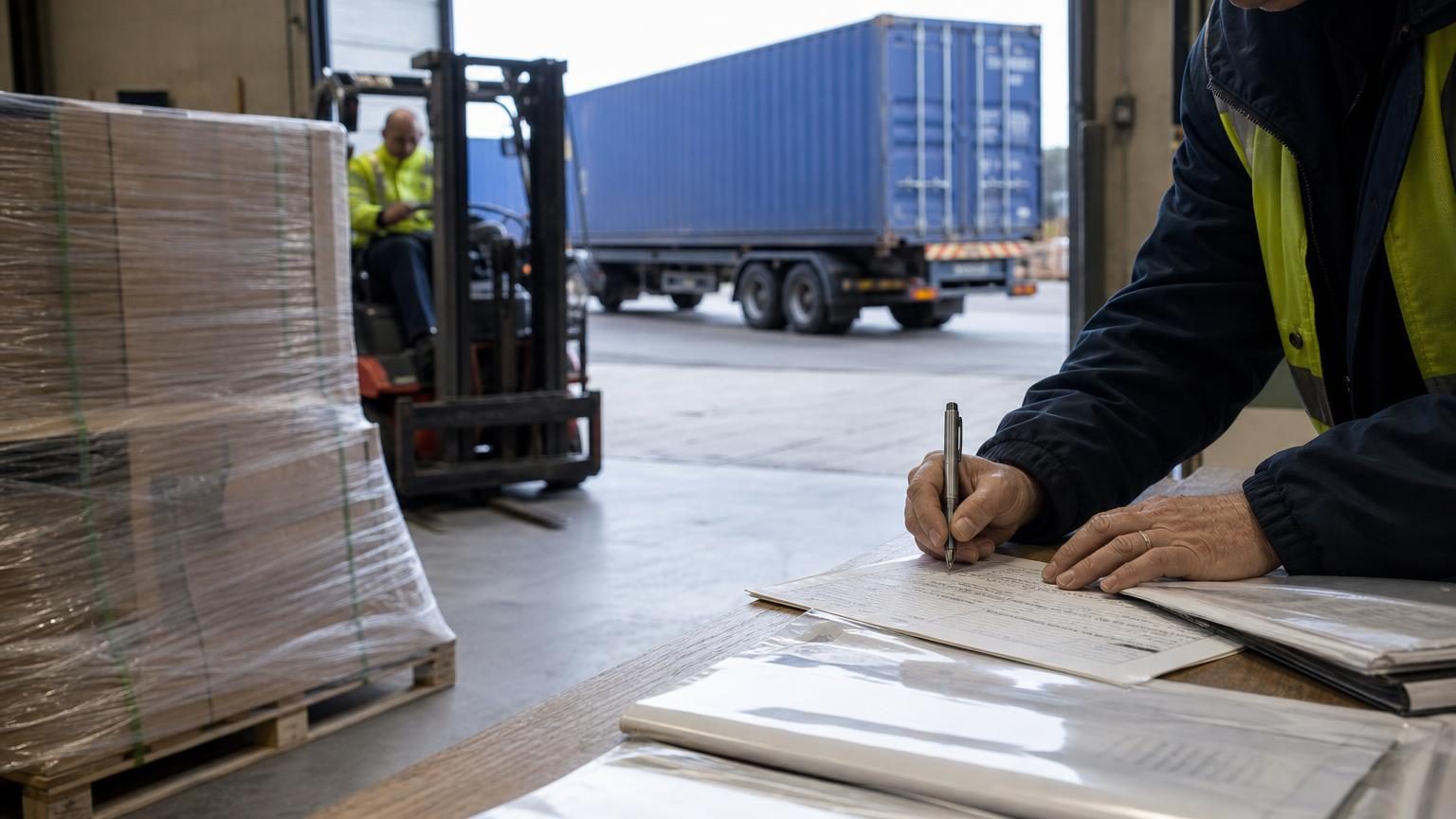
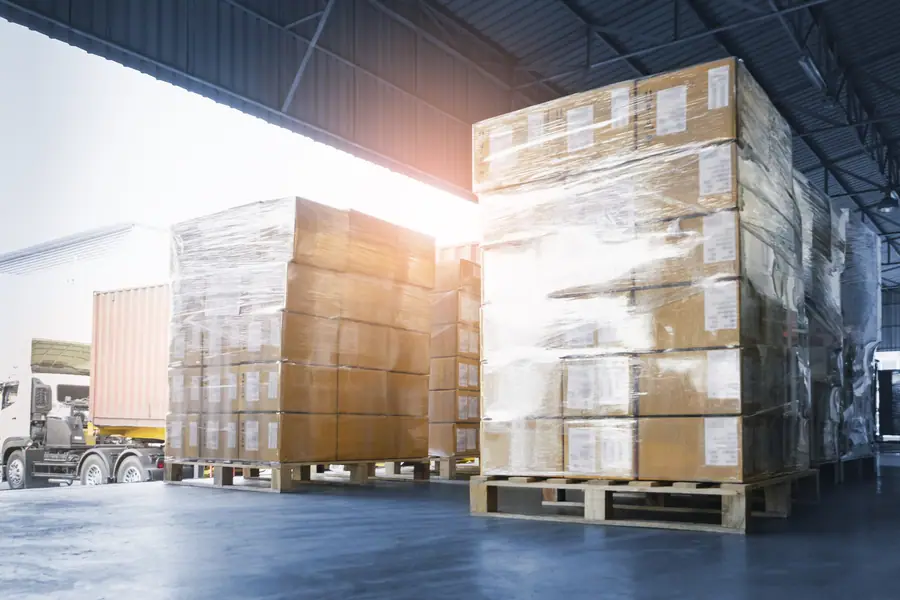
Use practical freight packaging guidelines for boxes, crates and pallets, including air and sea cargo, fragile goods, labels and dangerous goods.
How should freight be packaged?
Freight packaging must protect the cargo, remain stable during handling and suit the chosen transport mode. The shipper remains responsible for declaring the goods accurately and meeting any specialist packaging rules.
- Match the cargo
- Choose boxes, crates or pallets rated for the weight, fragility, shape and value of the goods.
- Stabilise the load
- Distribute weight evenly, remove movement inside packages and secure units to the pallet or base.
- Protect from transit forces
- Allow for stacking, vibration, moisture, temperature changes and repeated mechanical handling.
- Mark and document
- Keep labels visible and consistent with the packing list, handling instructions and shipping documents.
- Check specialist rules
- Dangerous, temperature-sensitive, oversized and air cargo may require approved materials, labels or carrier acceptance.
Good freight packaging has three jobs: protect the product, keep the handling unit stable and remain suitable for the route. The right answer depends on the cargo’s weight, dimensions, fragility, centre of gravity, value, sensitivity and hazards, as well as whether it will move by road, air, sea or several modes. There is no universal “freight box” or pallet pattern that is safe for every shipment.
Start by giving the packer and freight forwarder accurate product information. Include the packed dimensions and weight of every piece, any lifting or stacking restrictions, the value, temperature or moisture sensitivity, dangerous-goods status and the collection-to-delivery route. Packaging should be designed around the forces and handling the shipment will actually face, not only how it looks when it leaves the warehouse.
1. Choose packaging rated for the cargo
Use packaging whose construction and load rating are suitable for the product and journey:
- Corrugated cartons can suit boxed components and general cargo when the board grade, seams and compression strength match the contents, gross weight, humidity and expected stacking. “Double-wall” is not an automatic answer if the box design is otherwise unsuitable.
- Crates, cases and stillages can support heavy, irregular, fragile or high-value equipment when the base, frame, fixings and lifting points are engineered for the load. Not every heavy item needs a fully enclosed crate, but it does need a stable and approved handling method.
- Pallets turn packages into a mechanical-handling unit. The pallet must be sound, large enough to prevent overhang, compatible with the forklift or pallet truck and capable of carrying the load.
- Drums, intermediate bulk containers and specialist packaging must be compatible with their contents and any applicable transport rules.
Do not rely on appearance. Confirm manufacturers’ ratings and ask a packaging specialist for machinery, high-value, unusually shaped or shock-sensitive cargo. Reused packaging should be checked for water damage, crushed corners, missing boards, exposed fasteners, contamination and previous labels.

2. Stop movement inside the package
An undamaged outer box does not guarantee an undamaged product. Use blocking, bracing, dividers or cushioning so the contents cannot shift, strike each other or load a weak area of the packaging. Cushioning should be selected for the product’s weight and fragility; loose fill that settles during vibration may leave a heavy item unsupported.
Protect moisture-sensitive goods with a suitable barrier, desiccant or corrosion protection where the route and storage time justify it. Liquids need compatible, securely closed inner receptacles and containment appropriate to the product. Sharp edges, protrusions and concentrated loads should not cut through a carton, liner, strap or neighbouring package.
Seal cartons using a closure method designed for the board and gross weight. Stretch film can help unitise packages and protect against dust or light moisture, but it does not strengthen a damaged pallet or replace straps, blocking, lashing or vehicle restraint where those are required.
3. Build a stable pallet load
The Health and Safety Executive says goods must be stable at loading and then secured to the vehicle. If the unit is not stable, it should be placed in a box, stillage, frame or similar support before that support is secured. This distinction matters: wrapping cartons to a pallet creates a handling unit, but the completed unit may still need restraint inside the trailer or container.
For a palletised load:
- Use an undamaged pallet suitable for the weight and handling equipment.
- Keep the load within the pallet footprint and avoid unsupported carton overhang.
- Put heavier, stronger packages low and distribute weight around the centre of the pallet.
- Keep the centre of gravity as low and central as practicable.
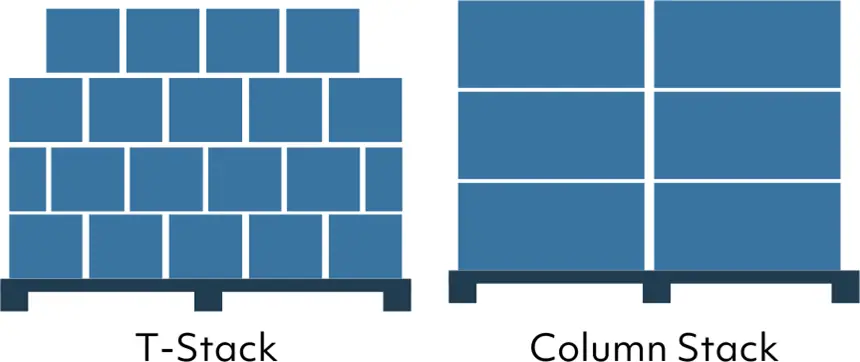
- Use a stacking pattern that suits the carton design. Column stacking can preserve compression strength; interlocking may add lateral stability but can reduce box strength. Test the complete unit rather than treating either pattern as universal.
- Fill gaps or use stabilising materials so packages cannot migrate during vibration.
- Use edge protectors, bands, stretch wrap or shrink film in a combination appropriate to the load, without crushing cartons.
- Confirm the completed pallet’s dimensions, gross weight, stackability and lifting access.
HSE’s load security guidance also makes clear that shifted loads must be dealt with safely rather than simply sent back onto the road.
4. Package air freight for handling and acceptance
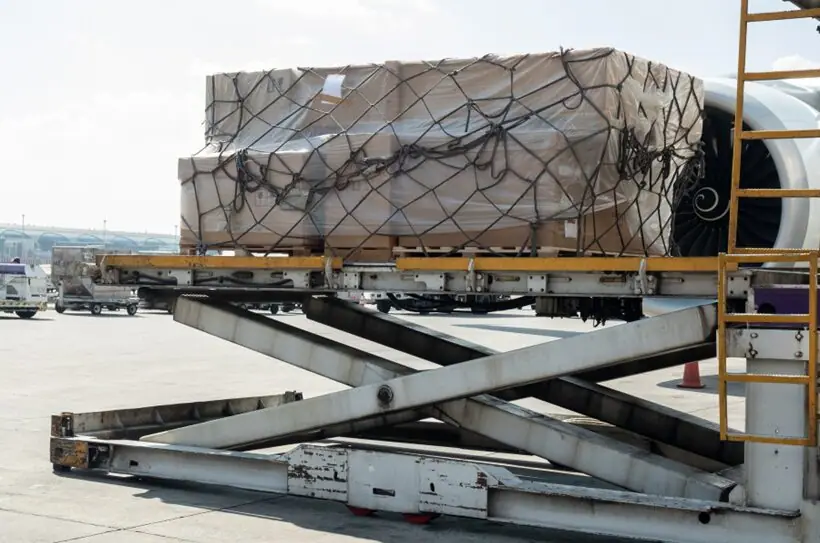
Air freight is repeatedly handled between collection, screening, terminal equipment, aircraft unit-load devices and destination delivery. Packaging should tolerate lifting, vibration and pressure from adjacent cargo, remain closed through handling and fit the carrier’s piece-weight and dimension limits. Confirm these limits before building a crate or pallet that cannot be accepted.
There is no single aircraft-hold temperature that applies to every route, aircraft and position. If the product has a temperature range, treat it as controlled cargo: define the permitted range, validate the packaging duration and book the required airline or handler service. Insulation alone does not guarantee temperature control.
Tamper-evident seals can support chain of custody, but they are not a universal packaging rule that makes all ordinary air cargo “secure”. Aviation security screening and regulated-cargo processes are separate from the packaging’s ability to contain and protect the product. The airline or handling agent can reject freight that is damaged, leaking, inadequately packed, misdeclared or outside its acceptance rules.
For ordinary air freight, provide the packed dimensions and gross weight early so chargeable weight, aircraft compatibility and handling can be assessed before collection.
5. Package sea freight for a longer, multi-handling journey
Sea freight packaging should allow for terminal handling, vessel movement, stacking forces, humidity and the possibility of condensation inside a closed container. Less-than-container-load cargo can be consolidated with other shipments, so each handling unit should be self-supporting and should not leak, protrude or damage neighbouring freight.
The joint IMO/ILO/UNECE CTU Code is a non-mandatory global code of practice for packing cargo transport units. It emphasises early planning, a suitable container or vehicle, compatible cargo, correct weight distribution and a tight or secured stow using appropriate blocking and lashing. It does not replace route-specific law or carrier rules.
Solid wood pallets, crates, dunnage and other wood packaging can require treatment and compliant marking under ISPM 15. GOV.UK states that solid wood packaging used to import goods into Great Britain must meet ISPM 15, while exporters must check the destination country’s requirements. Processed materials such as plywood are treated differently. Check the current wood packaging rules for import and export before the goods are packed; an unmarked pallet can create repacking, treatment, return or destruction costs at the border.
6. Treat dangerous goods as a specialist packing task
Dangerous goods cannot be made compliant by adding a hazard sticker to ordinary packaging. The shipper must first identify and classify the goods, including the UN number, proper shipping name, class and packing group where applicable. The selected transport mode then determines the packing instruction, permitted inner and outer packaging, quantity limits, closures, marks, labels and documents.
For air transport, the UK Civil Aviation Authority states that everyone involved has legal responsibilities and that classification is the shipper’s responsibility. IATA’s current Dangerous Goods Regulations cover shipper and operator responsibilities, packaging specifications, marking, labelling and documentation. For road and sea transport, ADR and the IMDG Code apply through their respective legal regimes. GOV.UK’s dangerous-goods transport guide gives the cross-modal starting point.
Do not send dangerous goods until a trained, competent person has confirmed the classification, current packing instruction, package type, quantity, closures, marks, labels and declaration. Tell the freight forwarder at quotation stage; hidden or undeclared batteries, aerosols, chemicals and other hazardous items can endanger people and lead to rejection or enforcement action.
7. Mark, label, weigh and record the completed freight
Labels should remain visible after pallet wrapping and match the shipment documents. Show the consignee or handling reference, piece count and any justified orientation, lifting, centre-of-gravity or handling marks. Do not use a “fragile” or “this way up” label as a substitute for packaging that can withstand normal transport. Remove obsolete barcodes and hazard marks from reused packaging.
Measure and weigh the completed pieces—not the unpacked products—and record whether they can be stacked. Photograph the product, internal protection, closed package and completed pallet before collection. These records help the carrier plan handling and provide evidence if damage is discovered.
Freight packaging checklist before collection
Confirm the following before handing the cargo to the carrier:
- Product description, value, dimensions, gross weight and centre of gravity are known.
- Fragility, moisture, temperature and dangerous-goods risks have been declared.
- The box, crate, drum, stillage or pallet is rated and undamaged.
- Internal movement is prevented with suitable blocking, bracing or cushioning.
- Liquids, sharp edges and concentrated loads are contained and protected.
- The handling unit is stable, within the pallet footprint and accessible to the planned equipment.
- Unitisation and transport restraint have both been planned.
- Wood packaging has the required ISPM 15 treatment and mark for the route.
- Marks, labels and documents are current, legible and consistent.
- Final packed dimensions, weights, stackability and photographs have been recorded.
Jenkar can plan the transport and explain carrier acceptance information for air freight, sea freight, road freight and multimodal shipments. Packaging remains the shipper’s responsibility unless a specific packing service is agreed. Send the cargo description, piece dimensions, weights, value, route, dates and any handling or dangerous-goods details so the team can identify what must be confirmed before collection.