A practical guide for businesses dealing with stock, storage, fulfilment or delivery delays, and how better warehousing and distribution planning can help.
Warehousing and distribution: how to reduce logistics delays
Logistics delays rarely come from one single problem. More often, they build up across stock handling, warehouse organisation, pick and pack processes, delivery planning, supplier timing, customs paperwork and communication. A small issue at the start of the chain can become a missed delivery window, an unhappy customer or a costly operational scramble.
For many businesses, the challenge is not that they lack effort. It is that the movement of goods has become more complex than the systems supporting it. Stock arrives at different times, orders change quickly, customers expect clearer updates, and transport capacity needs to be planned properly. When warehousing and distribution are not joined up, delays become harder to spot and even harder to prevent.
The good news is that many logistics delays can be reduced with better visibility, clearer processes and the right freight partner. This guide explains where delays usually happen and what businesses can do to keep goods moving more reliably.
Start by finding where delays actually happen
Before changing your process, it helps to understand where time is being lost. A delay may look like a transport problem, but the root cause could be earlier in the chain. Stock may not have been received properly. Items may be hard to locate in the warehouse. Orders may be released too late for same-day dispatch. Paperwork may be missing. Delivery instructions may be unclear.
Common delay points include:
- Goods arriving without clear booking or delivery information
- Stock being received but not checked or put away quickly
- Items being stored without a clear location system
- Orders waiting too long before pick and pack begins
- Incorrect stock counts causing failed fulfilment
- Transport being booked after the warehouse cut-off time
- Delivery addresses, contact details or access notes being incomplete
- Customs documents being prepared too late for international movements
Once you know where delays are happening, you can focus on the parts of the operation that will make the biggest difference. The aim is not to make the process complicated. It is to remove avoidable friction.
Keep stock visible and easy to locate
A warehouse can only move quickly if stock is easy to find. Delays often begin when teams know stock exists, but cannot locate it quickly enough to fulfil an order. This is especially common when products are stored across multiple areas, mixed pallets, temporary overflow spaces or third-party facilities.
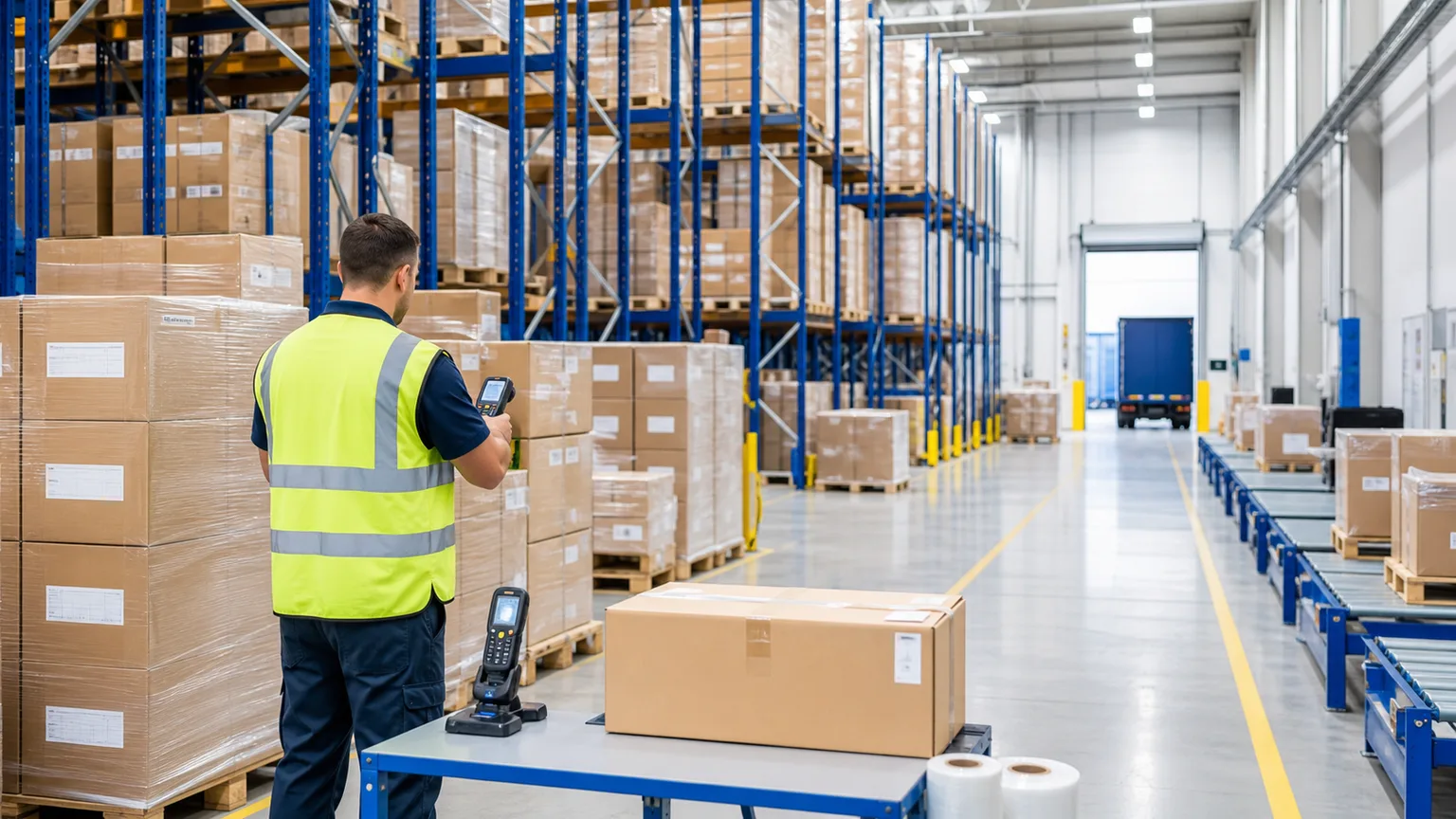
Clear location control is essential. Every item should have a known place, and every movement should be recorded. Even a simple system can work well if it is followed consistently. The key is making sure the warehouse team, operations team and transport partner are working from the same understanding of what is available and where it is stored.
Good stock visibility helps businesses avoid wasted time, failed picks, duplicate orders and last-minute transport changes. It also makes it easier to plan replenishment, prioritise urgent orders and manage customer expectations.
If your business needs storage, handling or onward distribution support, Jenkar's warehousing services can help create a more controlled route from stock arrival to final delivery.
Improve receiving and put-away processes
Delays often begin as soon as goods arrive. If deliveries are not booked in properly, warehouse teams may not have the space, labour or information needed to process the stock quickly. Goods can sit waiting to be checked, labelled or allocated, which then delays every order depending on that stock.
A stronger receiving process should answer a few simple questions before the goods arrive:
- What is arriving?
- When is it expected?
- How much space is needed?
- Does it require checking, labelling or repacking?
- Is any of it urgent or already allocated to orders?
- What transport is needed after storage or processing?
When this information is clear, goods can be received, checked and made available faster. It also reduces confusion between suppliers, warehouse teams and customer service teams.
Make pick and pack predictable
Pick and pack delays can be frustrating because they often happen close to the final dispatch point. At this stage, the customer may already expect delivery, but the order is still waiting to be prepared. A predictable fulfilment process reduces this pressure.
Businesses should look at order cut-off times, picking priority, packaging requirements and dispatch schedules. If urgent orders, standard orders and bulk movements are all competing for the same warehouse resource, delays are more likely. Clear rules help the team know what needs to happen first.
It is also worth reviewing how products are arranged. High-demand items should be easy to access. Products often sold together should be stored in a way that makes picking efficient. Packaging materials should be available before orders are released. These small improvements can reduce handling time and help dispatches leave on schedule.
Plan transport earlier
Warehousing and transport should not be treated as separate problems. A well-run warehouse can still experience delays if transport is booked too late, the wrong vehicle is requested, or delivery requirements are unclear.
Transport planning should begin before the goods are ready to leave. This is especially important for larger consignments, timed deliveries, multi-drop routes, fragile goods, palletised freight or deliveries with access restrictions. If the warehouse knows what needs to leave, and the transport provider knows what is coming, the whole process becomes smoother.
For UK movements, Jenkar's road freight services can support planned distribution, pallet movements and delivery schedules that need reliable coordination.
Reduce delays caused by poor delivery information
Some delays happen after the goods have left the warehouse. Failed deliveries, missed booking slots and driver waiting time often come down to incomplete delivery information. The address may be correct, but the site may require a booking reference, delivery window, contact name, vehicle restriction note or unloading instruction.
Before dispatch, check that delivery information is complete. This is particularly important for business parks, construction sites, retail distribution centres, ports, airports and locations with limited access. A few extra details can prevent failed delivery attempts and unnecessary return movements.
Useful delivery details include:
- Full delivery address and postcode
- Site contact name and phone number
- Delivery window or booking slot
- Vehicle access restrictions
- Loading bay or goods-in instructions
- Reference numbers required on arrival
- Special handling or unloading requirements
Prepare customs paperwork before the deadline
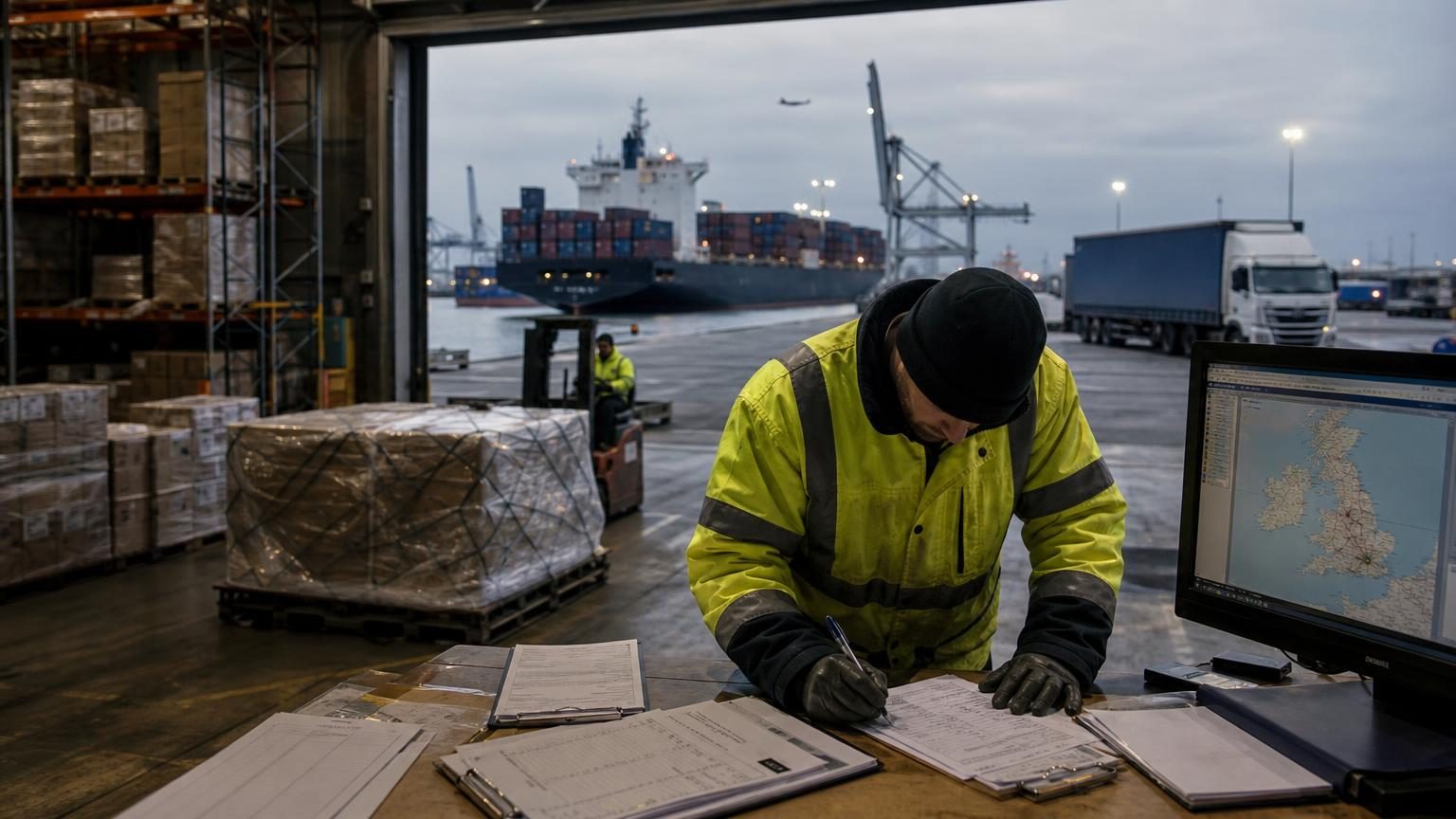
For international shipments, customs paperwork is one of the most common causes of delay. Goods may be ready, transport may be available, but the shipment cannot move smoothly if commercial invoices, commodity codes, values, origin details or clearance instructions are missing or incorrect.
Customs delays can affect delivery dates, storage costs and customer confidence. They can also create unnecessary pressure on operations teams if documents are prepared at the last moment.
For businesses moving goods across borders, it is sensible to prepare customs information early and check it before collection. Jenkar's customs clearance support can help reduce avoidable paperwork issues and keep international movements better organised.
Use one joined-up logistics view
Many businesses lose time because warehousing, transport and customer communication are managed separately. One team may know stock is delayed, another may have already promised delivery, and a third may be waiting for paperwork. The result is confusion, repeated chasing and avoidable disruption.
A joined-up logistics view does not need to be complicated. It means the key people can see what is due in, what is available, what is being picked, what is ready to dispatch and what is already in transit. This helps teams make better decisions and gives customers more accurate updates.
Working with a logistics partner that understands the full movement of goods can make this easier. Jenkar's wider freight and logistics services are designed to support businesses that need practical coordination across storage, distribution and freight movement.
Build in realistic time buffers
Speed matters, but unrealistic planning creates more delays, not fewer. If every stage depends on perfect timing, small issues quickly become major problems. A supplier running late, a delayed vehicle, a stock discrepancy or a missing document can disrupt the whole schedule.
Realistic buffers help protect important deliveries. This does not mean accepting slow service. It means planning around the real requirements of the goods, the warehouse, the route and the customer. For high-value, urgent or time-sensitive stock, it is better to plan earlier and communicate clearly than to rely on last-minute recovery.
When to review your warehousing and distribution setup
If delays are happening regularly, it may be time to review the overall setup. This is especially true if the business has grown, order volumes have changed, stock is being held in multiple places, or the team is spending too much time chasing updates.
Signs that your logistics process needs attention include:
- Frequent missed delivery dates
- Regular stock location issues
- Orders delayed during pick and pack
- Transport bookings being made too late
- Customers asking for updates the team cannot answer quickly
- Customs paperwork causing repeated hold-ups
- Warehouse teams relying on manual workarounds
- Rising costs from failed deliveries, storage or urgent transport
These problems are easier to fix when they are treated as part of one logistics flow, rather than separate warehouse, transport or admin issues.
Speak to Jenkar about reducing logistics delays
Reducing delays is not about adding complexity. It is about making goods easier to receive, store, find, prepare and move. With clearer stock visibility, better warehouse processes, earlier transport planning and stronger communication, businesses can reduce avoidable disruption and give customers a more reliable service.
Jenkar Shipping supports businesses with warehousing, distribution, road freight, customs clearance and wider logistics coordination. If your stock, storage or delivery process is becoming harder to manage, contact Jenkar to discuss a practical way forward.