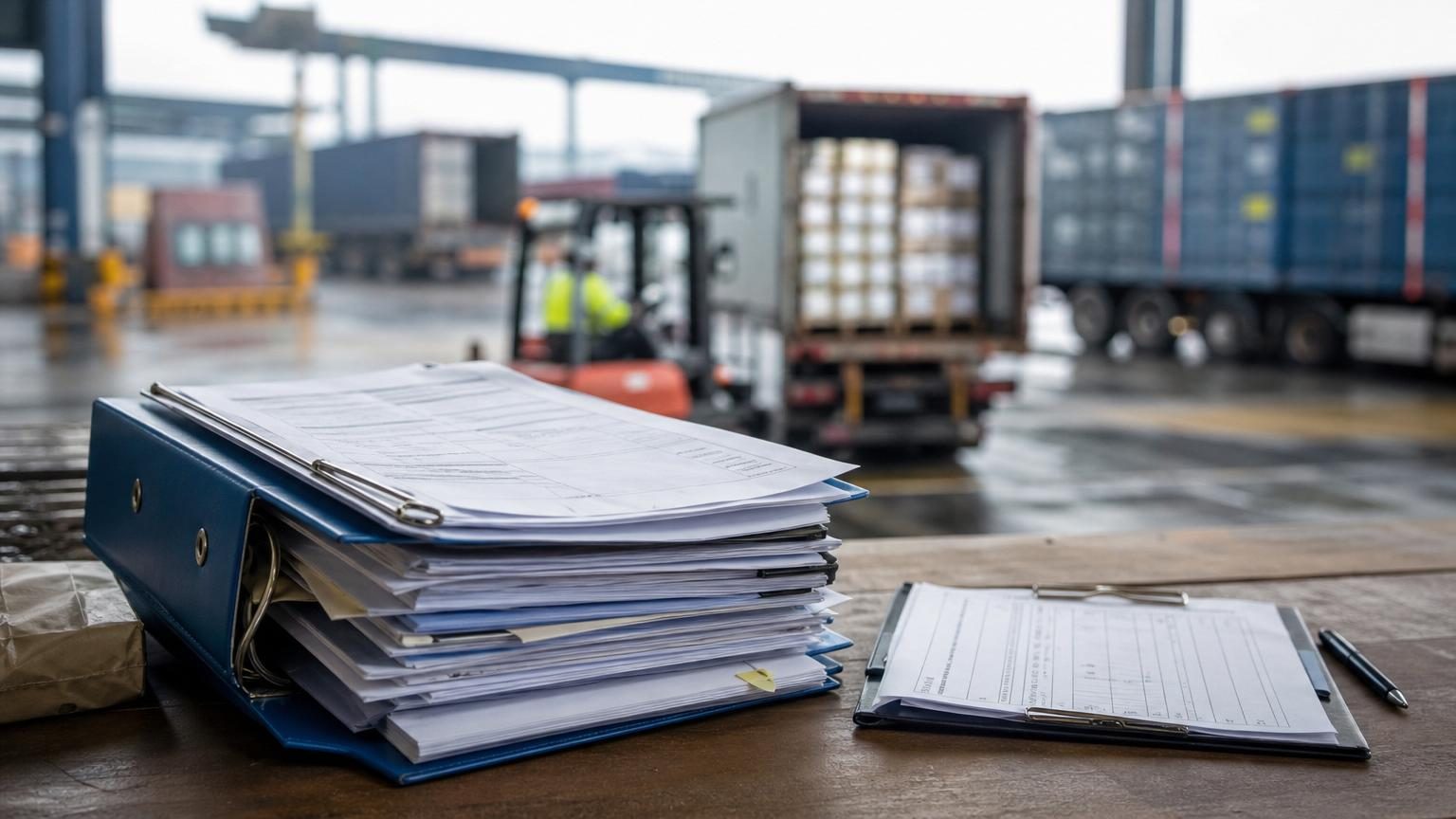

A clear guide for UK importers and exporters on what to include on a commercial invoice for international shipping and customs clearance.
A commercial invoice is one of the most important documents in international shipping. It tells customs what is being shipped, who is buying and selling the goods, what the goods are worth and which details are needed to assess duties, taxes and clearance requirements.
When a commercial invoice is clear and complete, it helps a shipment move more smoothly. When it is missing key information, customs clearance can slow down, costs can become harder to predict and your team may be asked for corrections at the worst possible time.
This guide explains what UK businesses should usually include on a commercial invoice for international shipping, and why getting it right matters.
What is a commercial invoice?
A commercial invoice is a formal document used for goods sold and shipped internationally. It is different from a standard sales invoice because it needs to support customs clearance as well as payment.
Customs authorities use the commercial invoice to understand the shipment. Freight forwarders, carriers and customs agents may also use it to prepare entries, check values and confirm who is responsible for different parts of the shipment.
For UK importers and exporters, the commercial invoice is often one of the first documents requested when arranging international freight.
Why the commercial invoice matters for customs
Customs clearance depends on accurate information. If the invoice does not explain the goods properly, or if values, origin details or buyer and seller information are missing, the shipment may be queried.
This can lead to:
- Clearance delays
- Additional admin
- Storage or demurrage charges
- Delivery disruption
- Incorrect duty or VAT calculations
- More pressure on internal teams
The commercial invoice does not need to be complicated. It does need to be specific, consistent and complete.
Key details to include
A strong commercial invoice should usually include:
- Seller or exporter name, address and contact details
- Buyer or importer name, address and contact details
- Invoice number and invoice date
- Delivery address if different from the buyer address
- Clear description of each product
- Quantity of goods
- Unit value and total value
- Currency used
- Country of origin
- Commodity codes where available
- Incoterms
- Reason for export
- Number and type of packages
- Gross and net weight
- Freight and insurance costs where relevant
- Signature or authorised contact details if required
The exact requirements can vary depending on the goods, destination and route, so it is worth checking before the shipment moves.
Write clear product descriptions
One of the most common problems with commercial invoices is vague product descriptions.
Descriptions such as samples, parts, accessories or goods are usually not enough. Customs needs to understand what the product actually is.
A better description explains the material, use and product type. For example, stainless steel machine brackets is more useful than parts. Cotton children's T-shirts is clearer than clothing. Replacement hydraulic pump for industrial machinery is clearer than spare part.
Clear descriptions reduce the chance of customs queries and help the right commodity code be applied.
Be accurate with values and currency
The commercial invoice should show the value of the goods clearly. This matters because duties and taxes are often calculated from the declared value.
Make sure the invoice shows the unit value, total value and currency. If goods are supplied free of charge, replacements, samples or warranty items, they may still need a realistic customs value. A zero-value invoice can create problems unless it is handled correctly.
If freight, insurance or other charges are included, make that clear so the customs entry can be prepared properly.
Include country of origin and commodity codes
Country of origin tells customs where the goods were made or produced. This is not always the same as where they were shipped from.
Commodity codes classify goods for customs purposes. They help determine duty rates, controls and documentation requirements. If you are unsure which code applies, ask for guidance before the shipment is ready to move.
Incorrect or missing commodity codes can create delays, especially for goods with specific controls, licences or duty treatment.
Check the Incoterms
Incoterms explain the responsibilities between buyer and seller. They affect who pays for freight, who arranges insurance, who handles import clearance and where responsibility transfers.
Common examples include EXW, FOB, CIF, DAP and DDP. Each one has a different meaning, so it is important that the term on the commercial invoice matches the agreement between buyer and seller.
If the Incoterms are wrong or unclear, it can create confusion over costs and responsibilities.
Make sure documents match each other
The commercial invoice should match the packing list, transport documents and booking details. Product descriptions, weights, package counts and addresses should be consistent across the paperwork.
Small differences can trigger questions. For example, if the packing list shows five cartons but the invoice shows four, someone may need to confirm which document is correct before the shipment can move.
It is much easier to fix this before collection than after goods are already in transit.
When to ask for help
If your shipment is high value, time-sensitive, moving to a new country or includes goods with special requirements, it is sensible to ask for support early.
An experienced freight forwarder can review the commercial invoice, explain what information is needed and help you avoid common customs clearance problems.
This is especially useful if your team does not ship internationally every day, or if you are working with a new supplier who may not understand UK import or export requirements.
A simple pre-shipment checklist
Before the shipment moves, ask:
- Does the invoice clearly describe the goods?
- Are buyer, seller and delivery details correct?
- Are values, quantities and currency shown?
- Is the country of origin included?
- Are commodity codes available?
- Are the Incoterms correct?
- Do invoice, packing list and booking details match?
- Has the freight forwarder checked the paperwork?
If the answer is yes, your shipment is more likely to move through customs without avoidable friction.
How Jenkar can help
Jenkar supports UK businesses with international shipping, customs clearance, air freight, sea freight, road freight and warehousing. Our team helps customers understand what paperwork is needed before goods move, reducing delays and making freight feel easier to manage.
If you need help preparing documents for an import or export shipment, contact Jenkar Shipping and we will help you take the next practical step.