Prepare the documents for UK air freight: commercial invoice, packing list, air waybill, customs declaration, origin and dangerous-goods forms.
Which documents are needed for air freight?
A typical UK commercial export starts with a commercial invoice, packing list, air waybill data and customs instructions. Other documents depend on the goods, route, sale and carrier.
- Commercial invoice
- Records the parties, goods, value, origin, currency, Incoterm and transaction details used for customs.
- Packing list
- Matches each package to its contents, dimensions, weights, marks and shipment references.
- Air waybill
- Provides the air-carriage record; the carrier or forwarder creates it from accurate shipper data.
- Customs declarations
- Many cross-border commercial movements need export and import declarations under the relevant procedure.
- Conditional documents
- Origin evidence, licences, permits, certificates and insurance depend on the goods and commercial route.
- Dangerous goods
- Regulated cargo must be disclosed, classified, packed, marked, labelled and declared under current air rules.
International air freight does not use one universal document pack. A typical UK commercial export starts with a commercial invoice, packing list, air waybill data and customs instructions. Proof of origin, licences, certificates, insurance evidence and a dangerous-goods declaration are conditional on the goods, route, sale and carrier.
The safest approach is to confirm the document owner, deadline and exact data before the cargo reaches the airline. A freight forwarder can coordinate the booked movement and declarations within the agreed scope, but the exporter and shipper remain responsible for supplying accurate information about the goods.
Air freight document checklist
| Document or data | Usually needed? | Who prepares or supplies it? | What it establishes |
|---|---|---|---|
| Commercial invoice | Yes for commercial international goods | Seller or exporter | Parties, goods, value, currency, origin, Incoterm and transaction details for customs |
| Packing list | Commonly required | Shipper or packer | Piece count, package type, contents, dimensions, gross and net weight, marks and references |
| Air waybill (AWB) | Yes for the air carriage | Airline, freight forwarder or authorised agent using shipper data | Receipt and evidence of the contract of carriage; an electronic record may replace paper |
| Export or import customs declaration | Required for many cross-border commercial movements, subject to the applicable procedure and exemptions | Trader or appointed customs representative | Classification, value, origin, procedure, parties and supporting-document references |
| Proof or certificate of origin | Only when the trade arrangement, buyer, bank or destination authority requires it | Exporter and, for some certificates, an authorised issuing body | Non-preferential origin or eligibility for preferential tariff treatment |
| Export or import licence or product certificate | Only for controlled goods or destinations | Exporter or importer through the relevant authority | Permission or product evidence needed before movement |
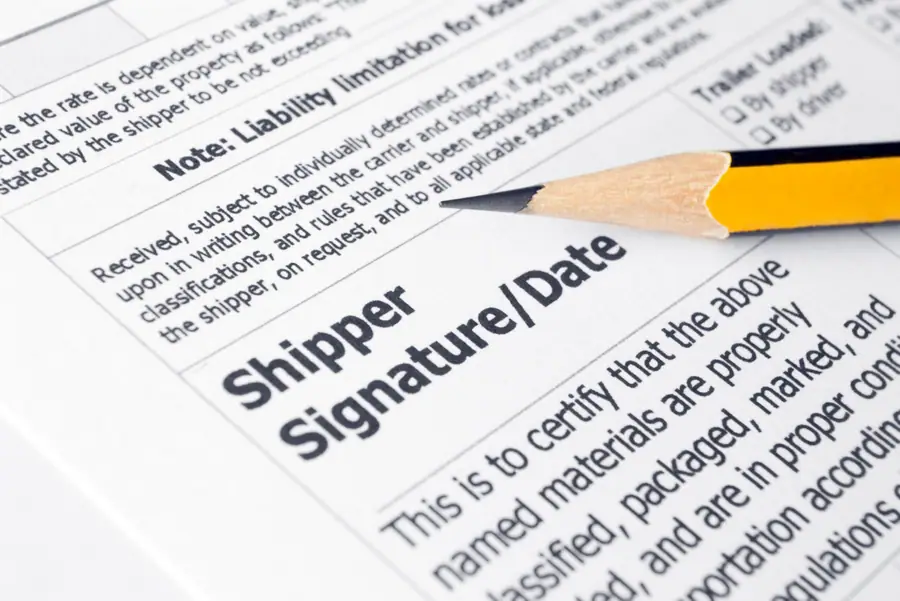
| Shipper’s Declaration for Dangerous Goods | Required for dangerous goods unless the regulations provide an exception | Trained shipper or consignor | Correct classification, packing, marking, labelling and declaration under current air rules |
| Insurance certificate | When cargo insurance is arranged or the sales/payment terms require evidence | Insurer or broker | The cover agreed for the stated cargo and movement |
This is a planning checklist, not a substitute for route-specific instructions. The airline, handling agent, customs authorities, bank or destination country may require additional data or original documents.
1. Commercial invoice
The commercial invoice is the customs and transaction record for the goods. It should identify the seller, buyer and consignee; invoice number and date; plain-language goods description; quantity; commodity code; unit and total value; currency; country of origin; package count; weight; Incoterm; and any freight, insurance or other charges relevant to the declared value.
The invoice, packing list, booking instructions and customs declaration must describe the same shipment. Vague descriptions such as “parts”, a missing currency or values that do not reflect the transaction can trigger questions, amendment work or a hold. Use the current UK Trade Tariff to research the commodity code, but do not guess when classification is uncertain.
2. Packing list
The packing list explains how the shipment is physically built. Record each package or pallet, its contents, marks, dimensions, gross weight and net weight where relevant. Include the total piece count and identify which items are inside each package.
Airlines and handling teams use accurate dimensions and weights to plan acceptance and chargeable weight. Customs may use the list to reconcile the goods against the invoice and declaration. Measure and weigh the completed packages rather than the unpacked products, and make sure labels and references match the documents. Jenkar’s freight packaging guide covers packing, pallet stability, marks and specialist cargo boundaries.
3. Air waybill (AWB)
The correct term is air waybill, not “airway bill”. IATA describes the AWB as the contract of carriage between the shipper and carrier. The airline or freight forwarder normally creates the record from the booking and shipper’s instructions; IATA does not issue each shipment’s AWB.
A consolidation can have a master air waybill for the airline movement and one or more house air waybills between the forwarder and individual shippers. The record includes the parties, airports, routing, pieces, weight, goods description, charges and handling information. The IATA e-freight guidance explains when an electronic air waybill can replace the paper document.
Check names, addresses, airport codes, piece count, weight and special-handling information before acceptance. The AWB is transport evidence; it does not replace the commercial invoice, packing list, customs declaration or cargo insurance.
4. Customs declaration and written instructions
A cross-border air shipment may need export and import declarations, depending on the countries, value, goods and customs procedure. In Great Britain, export declarations are made through the Customs Declaration Service. The declaration uses data such as the exporter and consignee, commodity code, customs procedure, value, origin, packages, mass, transport details and supporting-document references.
If Jenkar or another customs representative is appointed, the trader should provide written instructions and agree whether the representation is direct or indirect. The representative can prepare and submit the declaration within that authority, but the exporter or importer must still provide accurate information and retain the records required for the transaction. Start with the current GOV.UK export declaration guidance and check the destination’s import requirements separately.
5. Proof of origin and certificates
Country of origin belongs on the commercial invoice, but a separate certificate of origin is not automatically required for every air shipment. The required proof depends on the destination, trade agreement, goods and commercial terms.
Preferential origin can allow reduced or nil customs duty when the goods meet the relevant agreement’s rules. The proof might be a statement on origin, importer’s knowledge or another agreement-specific document rather than a generic certificate. Non-preferential certificates may be requested by the destination authority, customer, Chamber of Commerce, bank or letter-of-credit terms. Check the applicable agreement and GOV.UK proof-of-origin guidance before arranging one.
6. Licences, permits and product certificates
Some goods need permission or supporting evidence before export, import or carrier acceptance. Examples can include strategic or dual-use items, medicines, food, plants, animals, cultural goods, waste, controlled chemicals and goods affected by sanctions. The exact authority and document depend on the product and countries involved.
Screen the goods, parties, end use and destination early. A licence cannot normally be fixed after controlled goods have already reached the airport. For UK strategic controls, the exporter is responsible for checking whether an export authorisation is required under the current UK strategic export-control guidance.
7. Dangerous-goods declaration
Batteries, aerosols, chemicals, dry ice, magnets and other regulated articles must be disclosed at quotation stage. “Everyday” products can still meet a dangerous-goods classification, and carrier restrictions can be tighter than the basic regulatory route.
Where a Shipper’s Declaration for Dangerous Goods is required, a trained person must classify the goods and confirm the packing instruction, permitted quantity, packaging, marks, labels and declaration against the current rules. IATA states that consignors are responsible for preparing the declaration and certifying that the cargo has been packed, labelled and declared correctly. Use the IATA Shipper’s Declaration guidance and the booked carrier’s acceptance instructions. Do not send undeclared dangerous goods.
8. Insurance and payment documents
Carrier liability and cargo insurance are different. If cover is arranged, confirm the insured value, cargo, route, exclusions and claims evidence before the goods move. An insurance certificate may also be required by a buyer, bank or letter of credit.
Payment terms can create separate document deadlines. A letter of credit may specify exact names, dates, originals and wording across the invoice, packing list, AWB, insurance and origin documents. The bank checks the documents, not the physical cargo, so discrepancies can delay payment even when the shipment moves.
Who is responsible for air freight documents?
The exporter, importer, shipper, freight forwarder, carrier and customs representative do not own the same information. Agree the split in writing:
- Exporter or seller: commercial invoice, accurate goods description, value, origin and licence information.
- Shipper or packer: package contents, final dimensions and weights, marks, dangerous-goods disclosure and packing evidence.
- Freight forwarder: booking instructions, document coordination and the transport scope agreed in the quote.
- Airline or authorised agent: air waybill record and carrier acceptance.
- Customs representative: declaration submission within the written authority and data supplied.
- Importer or buyer: destination registrations, permits, import instructions, duty and tax arrangements where applicable.
A forwarder can identify gaps and coordinate the movement, but cannot safely invent product composition, value, origin or end use. Those facts must come from the business that knows the goods and transaction.
Pre-booking document check
Before collection, confirm that:
- Seller, buyer, consignee and importer names and addresses match across the file.
- The goods description is specific and consistent.
- Commodity code, origin, value, currency and Incoterm have been checked.
- Final piece count, package type, dimensions and weights match the booking.
- The route and airport codes are correct.
- Customs representation and declaration responsibilities are agreed in writing.
- Destination licences, permits and origin evidence have been confirmed.
- Batteries and all other possible dangerous goods have been disclosed.
- Insurance and payment-document requirements are understood.
- Every document owner knows the cut-off time and where the final record must go.
Prepare the air freight file with Jenkar
Jenkar coordinates international air freight, shipping documents and customs activity within the scope agreed for each movement. Send the collection and delivery points, goods description, package count, final dimensions and weights, value, origin, Incoterm, ready date and any dangerous-goods or licence details. The team can then identify the documents and approvals that must be confirmed before booking.
Request an air freight quote with the shipment details for a route-specific document and transport review.